

The Two Faces
Updated: Feb 10, 2021
So now that we have covered the history, origins, and the mythology of Lion dance, let's enhance our knowledge by getting to know the different types of Lion dances!

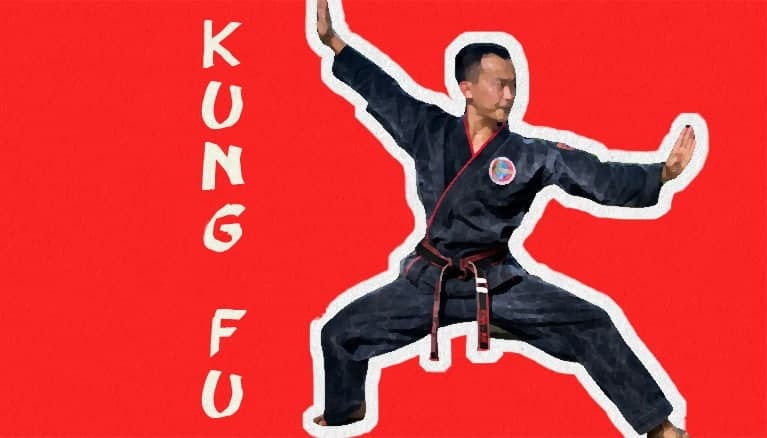
Lion dance is rooted in Chinese martial arts, known as wushu or kungfu (Khoo, 2013)
Lion dance performances were a way for a guild or troupe to show off their prowess. Dating back to the Qing dynasty, martial artists would use lion dance to communicate secretly (First Fist Kung Fu, n.d.). Until today, the dance form is characterized by impressive leaps, kicks, and other acrobatic stunts.
It evolved into 2 main styles: The Northern Lion Dance & The Southern Lion Dance. These lion dances were inspired by the movement of dogs and were a form of entertainment in the imperial court.
Here's a general comparison between the Northern and Southern Lion. These different styles can further be differentiated by their performing styles and the types of costumes.

Infographic Source (Beyond the dance 2013, 2013. , China culture, 2018 & Vasu., n.d.).
The Northern Lion
Northern Lions has the longest history of all forms of Lion Dance (Beyond the Dance 2013, 2013).
Northern Lions are commonly seen in Beijing, the Northern Part of China. To identify them by their appearance, the Northern Lions has a face similar to a "Peking Dog" and are usually more fierce-looking.
These Northern Lions are also known as "Golden Lions", in which their costumes consist of red and/or golden fur around them with a wooden head that is painted in gold.
Did you know that in the Northern Lions, there is a male and female lion?

The Male Northern Lion has a red coloured ribbon attached to his head, while the Female Northern Lion has a green coloured ribbon on her head
(Beyond the dance 2013, 2013).
In most of the performances, there will at least be a pair of Northern Lions performing. The small northern lion dance is usually performed by one person and the big lion is performed by two persons where one controls the lion head while standing and the other controls the lion nod and tail while hunching down.
Northern lions focus more on Chinese martial arts or kungfu because of its technical deliverance. Acrobatics with stunts like walking on wooden and bamboo stakes, jumping over tables and balancing on a ball is very common among them.
A short video to show you how the Northern Lion's performance looks like!
The Southern Lion
Southern Lions originated from Guangdong, Southern part of China. This type of lions is the ones we commonly see in Singapore during a lion dance performance.
Comparing the Northern and Southern lion, the southern lion is less hairy as compared to the Northern lion. They are also referred to an "Awakening Lion" where they are dressed in golden, yellow and orange hair where the body of the lion is covered with a cloth designed (the Lion blanket) in stripes that drape over the dancers to allow them to move freely.
The southern lion dance performance focuses mimicking the behaviour or lions and cats, actions like scratching, shaking its body, and licking of fur. It uses the martial arts "Horse Stance" more often as well (Cindy, 2021).
For the costumes, there are also a few key features:
The mirror between the lion’s eyes: scare evil spirits away,
The horn on the forehead: fight the evil,
The red ribbon: symbolizes blessed and awakened to pay respect to the gods
3 Southern Lion Sub-types
Futsan Lion dance (佛山)
Futsan lions have a high forehead, curved shaped lips and a very sharp horn on its head.
Its moves are closely related to traditional kung fu moves. Futsan’s dance movements include big movements and its dance routine is often quite rough (Beyond the Dance 2013, 2013).

Hoksan Lion dance (鶴山)
Created after the Futsan style by Master Chang Feng Geng.
Chang felt that the initial Futsan Lion did not represent the movements of an animal, hence he incorporated cat’s movements into the Futsan Lion (Beyond the Dance 2013, 2013).
Its forehead was lowered, the horns were rounder and the mouth resembled a duck's beak with flat lips to give it a more graceful and elegant appearance.

Futthock Lion (佛鶴獅)
As time passes, Singaporeans became more and more innovative and produced a Futthock style lion by combining traits from the Hoksan Lion and Futsan Lion (Beyond the Dance 2013, 2013).

JowGa Lion (周家)
On the other hand, the people from China created the Jow Ga style. Similarly, it uses the traits of Hoksan and Futsan (Beyond the Dance 2013, 2013).

References
Beyond the Dance 2013. (2013, June 11). Differences in the Lion dance. https://beyondthedance2013.wordpress.com/differences-in-the-lion-dance/
China culture. (2018, March 1). Northern Lion Dance and Southern Lion Dance. Beijing Tourism. http://english.visitbeijing.com.cn/a1/a-XDHE04AE9588E109E6E795
Cindy. (2021, February 5). Lion dances at Chinese New Year: Symbolism, origins and styles. China Highlights. https://www.chinahighlights.com/travelguide/special-report/chinese-new-year/new-year-lion-dance.htm
First Fist Kung Fu. (n.d.). Lion Dance. http://www.fivefistkungfu.ie/lion-dance.html#:~:text=Kung%20Fu’s%20Cultural%20King%20of%20Beasts&text=An%20important%20part%20of%20New,a%20secret%20means%20of%20communication.
Khoo, A. (2013, September 17). Lion dance: a cultural sport rooted in Wushu. ActiveSG. https://www.myactivesg.com/read/2013/9/lion-dance-a-cultural-sport-rooted-in-wushu
Las Vegas Kung Fu Academy Lion Dance Team. (2020, February 8). Futsan Lion Dance [Video]. YouTube. https://www.youtube.com/watch?v=Cn5A9xs1zqk&t=60s
megatrend007. (2012, February 6). CNY 2012 ~ Northern Lion Dance by Kun Seng Keng @ The Scott Garden [Video]. YouTube. https://www.youtube.com/watch?v=9AjYehq2cNs&feature=emb_logo
oclsvideos. (2013, May 16). Chinese Lion Dance & Kung Fu Demonstration [Video]. YouTube. https://www.youtube.com/watch?v=WoDbtNpUdjM
Vasu, S. (n.d.). Lion dance. National Library Board.
https://eresources.nlb.gov.sg/infopedia/articles/SIP_57_2004-12-27.html


Comments